

What Is In Vitro Maturation (IVM) and How Does It Work?
Medically Reviewed by Dr. Silvana Chedid on August 31, 2026
In Vitro Maturation, commonly called IVM, is a fertility treatment in which eggs are retrieved from the ovaries before they have fully matured and are then brought to maturity in a laboratory rather than inside the body. In a conventional IVF cycle, weeks of hormone injections stimulate the ovaries to develop several mature eggs at once before retrieval. IVM moves that final stage of egg development out of the body and into the embryology lab, which changes how much medication a cycle requires and how closely it needs to be monitored along the way.
At Chedid Grieco, we have spent more than 30 years building a female-led reproductive medicine practice that treats close to 1,200 cycles a year and has helped bring together nearly 9,000 families. In vitro maturation is one part of our broader in vitro maturation program, which we built for patients who want to minimize hormone exposure or who face a higher risk of complications from standard stimulation. Our practice was among the first to introduce intracytoplasmic sperm injection to Brazil, and we remain one of only eight clinics outside the United States to hold a New York tissue license, a credential that governs how reproductive tissue is handled and shipped between countries.
How In Vitro Maturation Differs From Conventional IVF
The core difference between the two approaches comes down to where and when egg maturation happens. Conventional IVF asks the ovaries to do that work under a heavy hormone load; IVM asks the lab to do it instead, once the eggs are already out of the body.
What Happens During a Conventional IVF Cycle
In a standard IVF cycle, patients typically follow a stimulation protocol of about 10 to 12 days of daily gonadotropin injections. These hormones push multiple follicles to grow and mature at the same time so that a larger number of mature eggs are available for retrieval. Getting the dosing right requires frequent bloodwork and ultrasounds throughout the stimulation window, and the higher hormone levels involved carry a real risk of ovarian hyperstimulation syndrome, or OHSS, in some patients.
How IVM Moves Egg Maturation Into the Lab
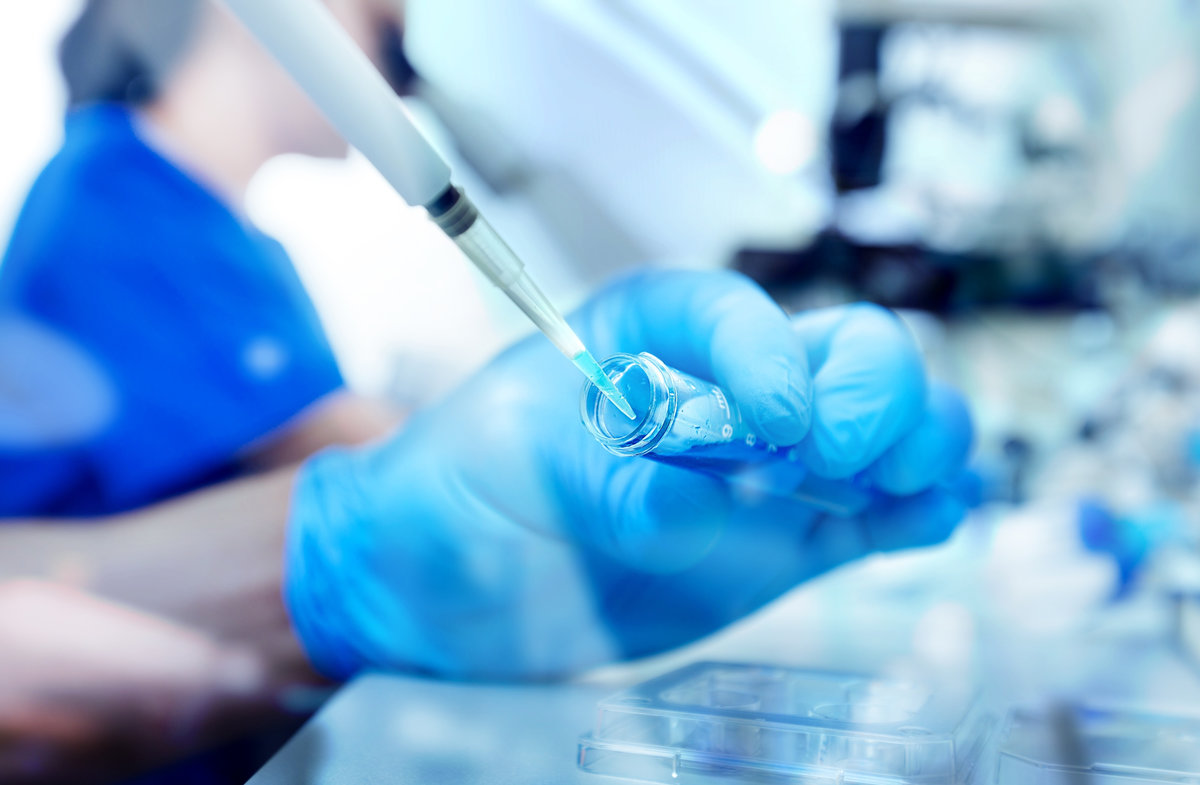
With IVM, eggs are retrieved from unstimulated or minimally stimulated ovaries, well before they would be considered mature in a conventional cycle. Rather than finishing that maturation process inside the body, the eggs are placed in a purpose-built culture medium designed to mimic the hormonal environment of the ovary, and our embryologists monitor them closely over roughly 24 to 48 hours as they mature. Once mature, the eggs can move forward through fertilization and embryo development on a path that looks very similar to conventional IVF from that point on.
Who May Be a Good Fit for In Vitro Maturation
IVM tends to be discussed most often with patients for whom minimizing hormone medication is a priority, or who carry a meaningfully elevated risk of OHSS under a standard stimulation protocol. According to a committee opinion from the American Society for Reproductive Medicine, patients with polycystic ovary syndrome or a high antral follicle count are frequently discussed as candidates, since these patients tend to have a large number of small follicles available for retrieval even without stimulation, and they are also the group most susceptible to OHSS under conventional protocols. We walk through this in more detail in our post on whether IVM is an option for patients with PCOS.
Beyond PCOS, patients who want to avoid daily injections for medical, scheduling, or personal reasons, patients who have not tolerated stimulation medications well in a previous cycle, and patients seeking a lower medication cost per cycle often raise IVM as a question during consultation. Candidacy is never assumed from a single factor, though. It depends on a full evaluation of ovarian reserve, prior treatment history, and overall reproductive health, which is why we cover the broader picture in our post on who tends to be an ideal candidate for in vitro maturation.
The In Vitro Maturation Procedure Step by Step
An IVM cycle follows a sequence that will feel familiar to anyone who has researched conventional IVF, with the biggest differences concentrated in the early stimulation phase. Here is what the process generally looks like from first visit to embryo transfer or cryopreservation.
Baseline Evaluation and Minimal Monitoring
The process begins with a baseline evaluation that includes bloodwork and an ultrasound to assess ovarian reserve and overall reproductive health. From there, patients receive either no ovarian stimulation at all or a very short, minimal-dose hormone regimen, which means far fewer monitoring appointments than a conventional stimulation cycle typically requires.
Egg Retrieval Under Sedation
Egg retrieval for IVM uses the same approach as conventional IVF. Using ultrasound guidance, a thin needle is passed through the vaginal wall to reach the ovaries and collect the immature eggs. The procedure generally takes about 20 to 30 minutes and is performed under sedation for patient comfort. Because the ovaries were not pushed through a full stimulation protocol beforehand, the follicles targeted are typically smaller than those in a conventional retrieval.
Laboratory Maturation of the Eggs
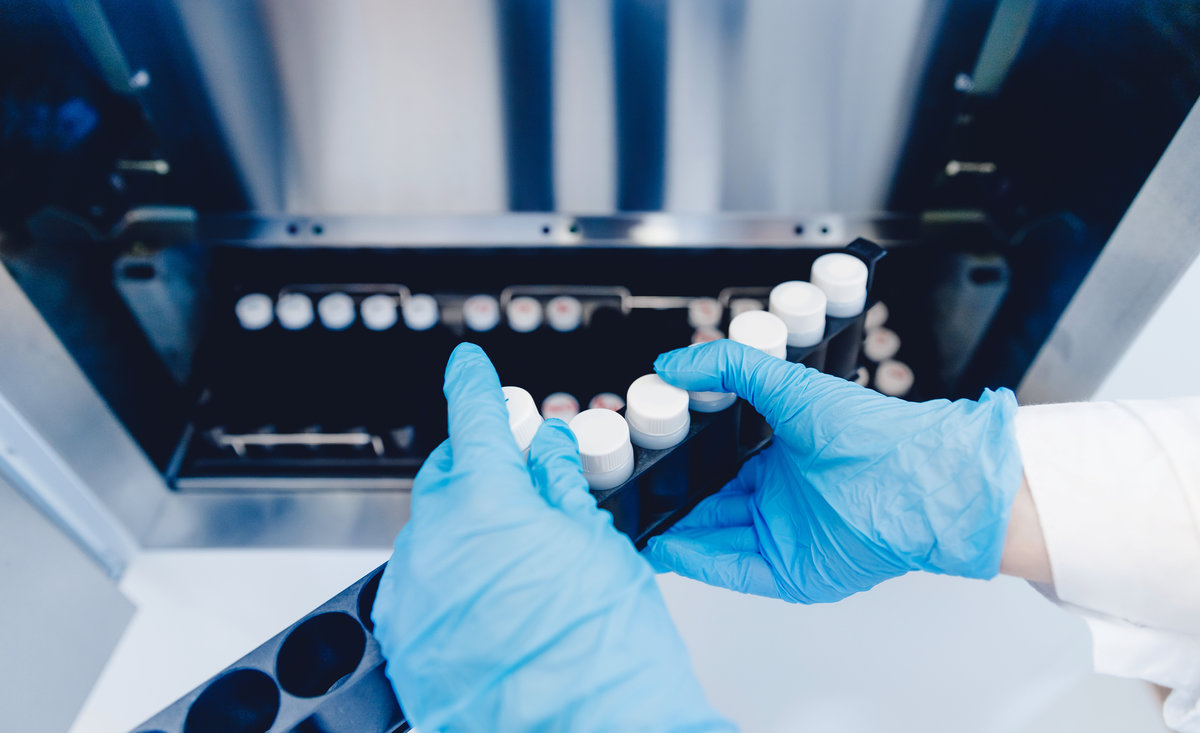
Once collected, the immature eggs are placed into a culture medium containing hormones and growth factors designed to approximate what would normally happen inside the body. Over the next 24 to 48 hours, embryologists monitor the eggs closely as they mature, checking for the specific markers that indicate an egg is ready to be fertilized. Our post on the laboratory science behind IVM egg maturation goes into more depth on what happens inside the culture dish during this window.
Fertilization, Embryo Culture, and Transfer or Cryopreservation
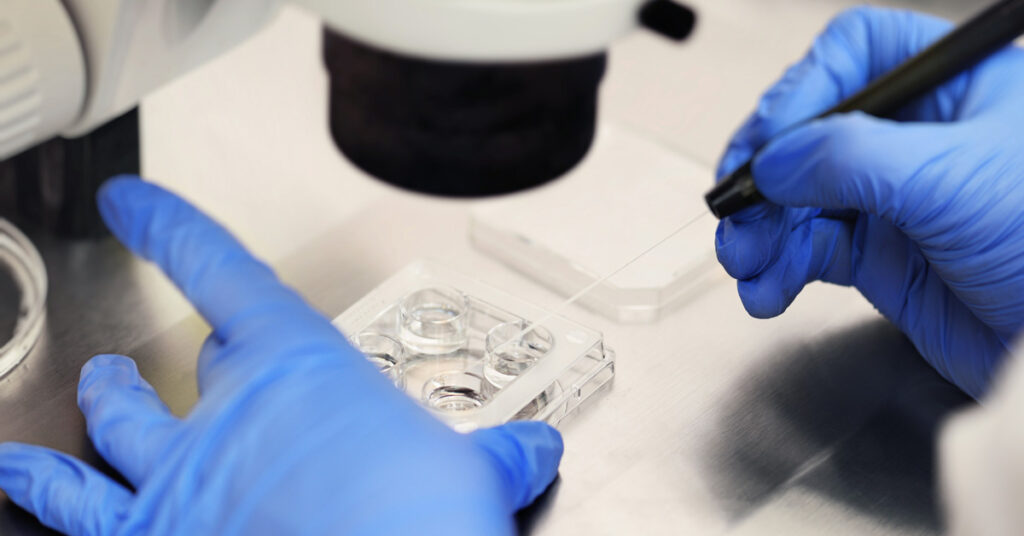
After maturation, eggs are fertilized with sperm, often through intracytoplasmic sperm injection, or intracytoplasmic sperm injection (ICSI), since a single sperm can be placed directly into a lab-matured egg. The resulting embryos are cultured for several days before either being transferred to the uterus or cryopreserved for a future frozen transfer. The transfer procedure itself is identical to a conventional IVF transfer and takes only a few minutes. For a closer look at what our lab does with eggs between retrieval and transfer, see our post on what happens to your eggs after retrieval.
Medication Burden and Monitoring Compared to Conventional IVF
Because IVM removes or shortens the stimulation phase, the medication and monitoring differences between the two approaches are significant. A few of the most common differences patients ask about include the following:
- Injections: Conventional IVF generally involves daily gonadotropin injections for 10 to 12 days, while IVM involves minimal or no stimulation injections.
- Monitoring visits: Frequent bloodwork and ultrasounds are needed to track follicle growth during conventional stimulation, while an IVM cycle requires far fewer check-ins before retrieval.
- OHSS risk: High hormone levels during conventional stimulation carry a real risk of OHSS, while IVM’s minimal stimulation approach is associated with a meaningfully lower risk of this complication, particularly for patients with PCOS.
- Cycle timeline: IVM can shorten the calendar time from first visit to retrieval, since there is little or no stimulation phase to wait through.
These differences do not mean one approach is simply “better” than the other. They reflect a different tradeoff between medication burden and the number of eggs a given cycle can produce, which is one reason a full evaluation matters before choosing a protocol. We explore the day-to-day experience of a lower-medication cycle further in our post on how IVM reduces the need for daily injections.
Combining In Vitro Maturation With Other Fertility Techniques
IVM is rarely used in isolation. Because a lab-matured egg has already had its surrounding cumulus cells removed for evaluation, ICSI is the most common fertilization method paired with IVM, since it allows a single sperm to be injected directly into the egg rather than relying on the egg and sperm to interact on their own in a dish. This pairing is particularly relevant for couples who are also managing male factor infertility alongside a preference for lower-medication egg retrieval, a combination we cover in our post on combining IVM with ICSI for male factor infertility. From there, the resulting embryos can be cultured, tested if needed, and transferred or frozen using the same protocols used in any conventional IVF cycle.
Why Patients Choose Chedid Grieco for In Vitro Maturation
Dr. Silvana Chedid has spent more than 30 years in reproductive medicine and was instrumental in introducing ICSI to Brazil, work that has supported almost 9,000 babies born through our practice. Our clinic is FDA-licensed and NYDH-licensed, we perform close to 1,200 cycles a year, and we are one of only eight clinics outside the United States to hold a New York tissue license, a standard that shapes how we handle and ship reproductive tissue across borders. We are also a female-led, LGBTQI+-supportive practice, and every treatment plan we build is customized to the patient in front of us rather than run from a single standard protocol.
If you are weighing IVM against a conventional stimulation cycle, that decision deserves a conversation grounded in your own ovarian reserve, health history, and goals rather than general information alone. Our consultations take place in Miami, with treatment carried out at our clinic in Brazil through our fertility tourism program, and our team is glad to walk you through what a personalized IVM protocol could look like for you. Reach out through our contact form to schedule a consultation.
Frequently Asked Questions About In Vitro Maturation (IVM)
What is the main difference between IVM and conventional IVF?
Conventional IVF uses about 10 to 12 days of hormone injections to mature multiple eggs inside the ovaries before retrieval. IVM retrieves eggs while they are still immature and completes the maturation process in a laboratory instead, which means minimal or no stimulation injections and fewer monitoring visits leading up to retrieval.
Who tends to be a good candidate for IVM?
Patients with polycystic ovary syndrome or a high antral follicle count are commonly discussed as candidates, since they tend to have many small follicles available even without stimulation and carry a higher baseline risk of ovarian hyperstimulation syndrome. Patients who want to avoid daily injections or who did not tolerate stimulation well in a prior cycle may also raise IVM during consultation, though candidacy always depends on a full individual evaluation.
Does IVM lower the risk of ovarian hyperstimulation syndrome?
Because IVM uses minimal or no ovarian stimulation, it substantially reduces exposure to the high hormone levels that drive ovarian hyperstimulation syndrome. This is one of the main reasons IVM is discussed with patients who have PCOS or a high antral follicle count, since this group faces the greatest OHSS risk under a conventional stimulation protocol.
How many monitoring appointments does an IVM cycle require?
IVM requires far fewer monitoring visits than conventional IVF because there is little or no stimulation phase to track. A conventional cycle involves frequent bloodwork and ultrasounds over 10 to 12 days to fine-tune medication dosing, while an IVM cycle moves from baseline evaluation to retrieval on a much shorter, lighter monitoring schedule.
Can IVM be combined with ICSI?
Yes. ICSI is the most common fertilization method used with IVM, since a lab-matured egg has had its surrounding cells removed for evaluation, making direct sperm injection into the egg the practical approach. This pairing is especially relevant for couples managing male factor infertility alongside a preference for a lower-medication retrieval cycle.
What happens after eggs are retrieved for IVM?
After retrieval, immature eggs are placed in a purpose-built culture medium for roughly 24 to 48 hours while embryologists monitor them for signs of maturity. Once mature, the eggs are fertilized and the resulting embryos are cultured for several days before being transferred to the uterus or cryopreserved for a future frozen embryo transfer.
ABOUT THE AUTHOR
Reproductive Medicine Specialist, Chedid Grieco
Dr. Silvana Chedid has over 30 years of experience in reproductive medicine and has helped nearly 9,000 families grow through advanced fertility treatments at Chedid Grieco.
Recent Posts