

How Multilingual Care Reduces Medical Errors in International Fertility Treatment
Medically Reviewed by Dr. Silvana Chedid on August 17, 2026
When you are coordinating fertility treatment abroad, the ability to communicate clearly with your medical team is not a comfort; it is a clinical necessity. Misunderstood instructions, consent forms in a language you do not fully grasp, and medication protocols lost in translation can all create real risks at every stage of treatment. For international patients, the language your clinic speaks may be just as important as the technology it uses.
At Chedid Grieco, our team communicates fluently in Spanish, English, Portuguese, and French, making us one of the few international fertility tourism destinations where patients receive care in their own language from start to finish. With 30 years of experience and 8,780 babies born, we have seen firsthand the role clear communication plays in protecting patients and supporting the best possible outcomes.
Where Language Barriers Create Clinical Risk
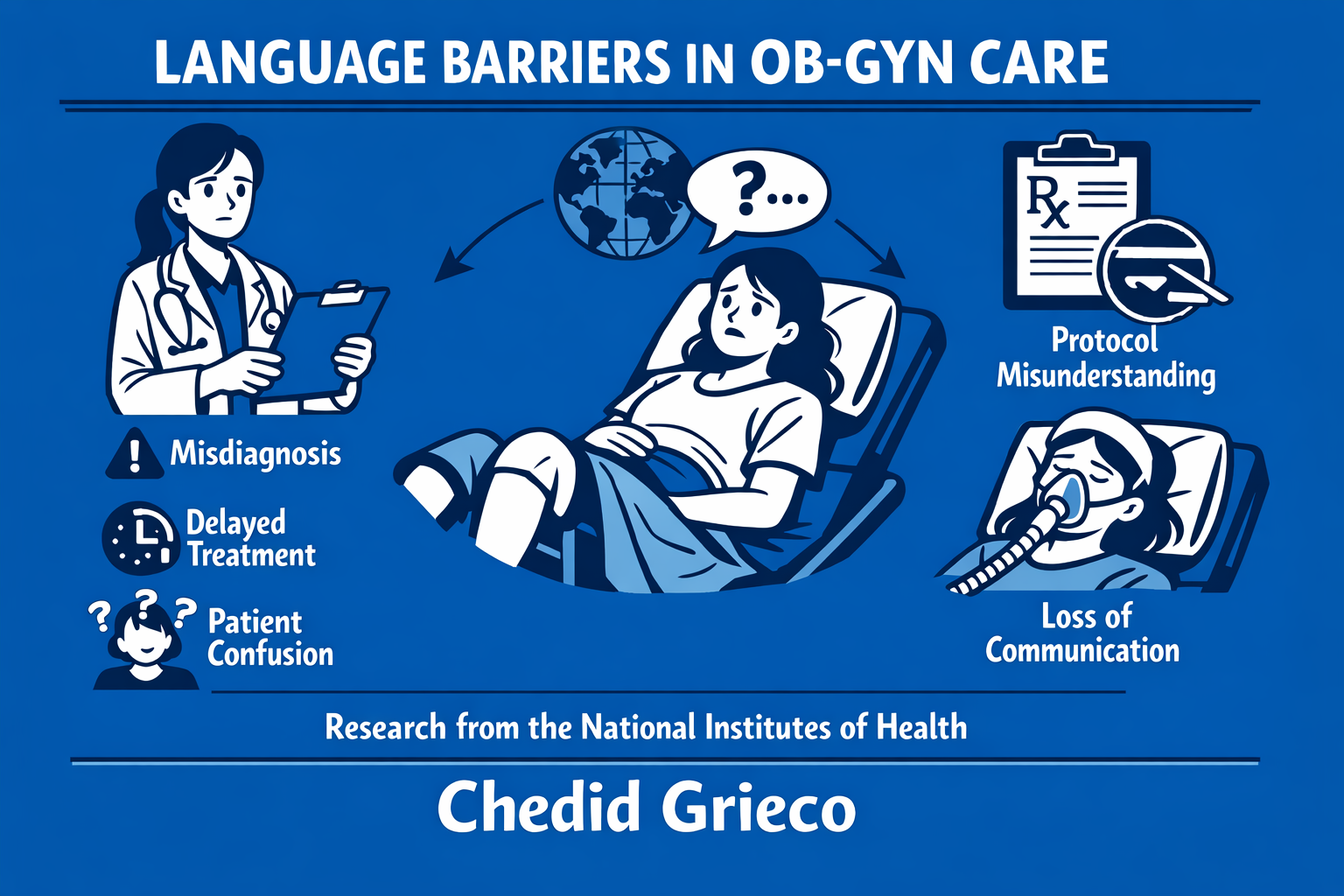
Language gaps in reproductive medicine are well documented as a source of treatment disruption and medical error. Research published by the National Institutes of Health confirms language barriers in OB-GYN care contribute to misdiagnosis, delayed treatment, and reduced patient comprehension of prescribed protocols, including situations where patients lose communicative ability in a second language when under stress or sedation.
In fertility treatment, the stakes are especially high. Patients managing hormone protocols, timed procedures, and informed consent decisions cannot afford ambiguity. A missed detail about injection timing, a misread medication dosage, or an incomplete consent discussion are the kinds of errors that can derail a cycle or compromise patient safety.
What the Research Shows for Fertility Patients Specifically
Studies examining non-English-speaking patients in fertility clinics have found language barriers contribute to higher IVF cancellation rates, fewer completed treatment cycles, and longer delays between initial consultation and the start of treatment. These are not abstract statistics. They represent real patients whose care was compromised by something as preventable as the absence of a shared language.
For patients pursuing in vitro fertilization abroad, this problem is compounded. You are coordinating with a clinical team across time zones, managing pre-treatment testing at home, and making complex medical decisions in an unfamiliar system. Having a team that speaks your language removes a layer of risk no other clinical credential can replace.
Where Language Gaps Tend to Surface Across a Treatment Timeline
Communication risk is not evenly distributed across a fertility cycle. It tends to concentrate at a handful of specific moments, and knowing where to expect it helps you prepare better questions before you arrive.
Informed Consent and Intake
Consent forms for egg retrieval, embryo transfer, and egg donation cycles cover legal and medical detail that is difficult to absorb even in a first language. When a patient signs a form they only partially understand, the consent itself becomes less meaningful, and questions that should have been asked during intake often surface later, under more stressful circumstances.
Medication Timing and Self-Administration
Stimulation protocols depend on injections given at specific times, often self-administered at home. A translated label or a rushed explanation is a common point where dosing or timing gets confused, and it is one of the more preventable sources of cycle disruption.
Coordination Between Multiple Parties
Egg donation and donor-assisted cycles involve coordination between a donor, a recipient, and the clinical team, sometimes across two or three languages at once. Clear, native-language communication with every party involved reduces the chance that a scheduling detail or medical instruction gets lost between conversations.
How Native-Language Care Changes the Patient Experience
When your provider speaks your language fluently, not through a translator but as a proficient speaker, you are better equipped to advocate for yourself. You ask more questions, you retain more information, and you are more likely to follow through on the precise timing a fertility protocol demands.
This matters during the consultation process, when you are weighing options and processing emotional information alongside complex medical data, and it matters in aftercare, when you return home and need to interpret lab results or respond to clinical guidance remotely.
What to Look for in a Multilingual Fertility Clinic
If you are evaluating clinics for treatment abroad, a few practical signs indicate whether multilingual care is genuinely built into daily operations rather than offered as an occasional accommodation:
- Native-speaking clinicians, not only translators: A translator relays words; a fluent clinician catches the nuance behind them, including tone and hesitation that often signal an unanswered question.
- Consent materials in your language: Forms you can read independently, not only forms explained to you verbally, give you time to review details before signing.
- Consistent language support across every stage: Consultation, monitoring, procedure day, and aftercare should all happen in the same language, not just the initial visit.
- Written after-visit summaries: A clear written recap in your language helps you retain instructions once you have left the appointment.
These details are easy to overlook when comparing clinics on cost or technology alone, but they shape how safely and confidently you move through treatment.
The Chedid Grieco Difference
At Chedid Grieco, multilingual support is built into how we care for every patient rather than offered as an add-on service. Our team works fluently in Spanish, English, Portuguese, and French, reflecting the communities we serve across the United States, Latin America, and beyond. You can review common questions about our process and learn more about our clinical team to help guide your decision.
Our multilingual approach is part of a broader commitment to personalized care supported by the technology behind our laboratory and monitoring protocols. Every treatment plan is tailored to the individual, and every conversation with our patients is one where nothing is assumed or left to chance.
Begin Your Care with Chedid Grieco Today
Choosing a fertility clinic abroad means placing significant trust in a team you are getting to know from a distance. At Chedid Grieco, that trust is built through clear, honest communication in the language most natural to you. Our FDA-licensed, NYDH-licensed clinic in São Paulo, Brazil, performs over 1,200 cycles per year, backed by a team of eight physicians with decades of combined clinical experience.
Consultations take place in Miami, while treatments are conducted at our facility in Brazil, giving you the support of a US-based appointment before any travel is involved. Learn more about what makes our model work on our fertility tourism page, and when you are ready to take the next step, contact us to start a conversation in the language that works best for you.
Frequently Asked Questions About Multilingual Fertility Care
Do I need to speak Portuguese to have treatment done in Brazil?
No. Patients are cared for in the language they are most comfortable with throughout consultation, treatment, and aftercare, including English, Spanish, Portuguese, or French, so fluency in Portuguese is never a requirement for care in Brazil.
Will my consent forms and medical records be available in English?
Yes. Consent materials and treatment summaries can be reviewed in your preferred language, which gives you time to read and ask questions before signing rather than relying solely on a verbal explanation.
How does language support work for egg donation cycles with multiple parties?
Each party involved in a donation cycle, including the donor and the recipient, communicates with the clinical team in their own preferred language, which keeps scheduling and medical instructions consistent across every conversation.
Can I get support after I return home from treatment in Brazil?
Yes. Aftercare communication, including lab results and follow-up guidance, continues in your preferred language once you have returned home, which reduces the chance of a missed detail during a remote follow-up.
Why does language matter more in fertility treatment than in general medical care?
Fertility treatment depends on precisely timed medications, informed consent for procedures, and close coordination between multiple people, so a small miscommunication can affect an entire cycle rather than a single appointment.
ABOUT THE AUTHOR
Director, Chedid Grieco Reproductive Medicine Laboratory
Dr. Silvana Chedid has led the Chedid Grieco Reproductive Medicine Laboratory in São Paulo since 1995 and directs the Center for Pelvic Endoscopy and Human Reproduction at Hospital Beneficência Portuguesa. She is a member of the American and European Human Reproduction Societies.
Recent Posts