


Understanding Brazil’s Egg Donation Laws: What US Intended Parents Need to Know About Donor Anonymity
 If you are a US intended parent considering egg donation through a Brazilian fertility clinic, one of the first questions you may have is whether you will be able to know anything about your donor. The short answer is that Brazil requires donor anonymity by law, and that framework looks quite different from what many patients expect based on their experience with US practices. Knowing what this means before you begin helps you plan with clarity rather than uncertainty.
At Chedid Grieco, we have guided patients from the United States through the Brazilian egg donation process for many years. Our egg donation program is built around transparency, personalized matching, and boutique-level care, and our team is here to walk you through every step of what the process involves, including what information you will and will not receive about your donor.
How Brazil Regulates Egg Donation
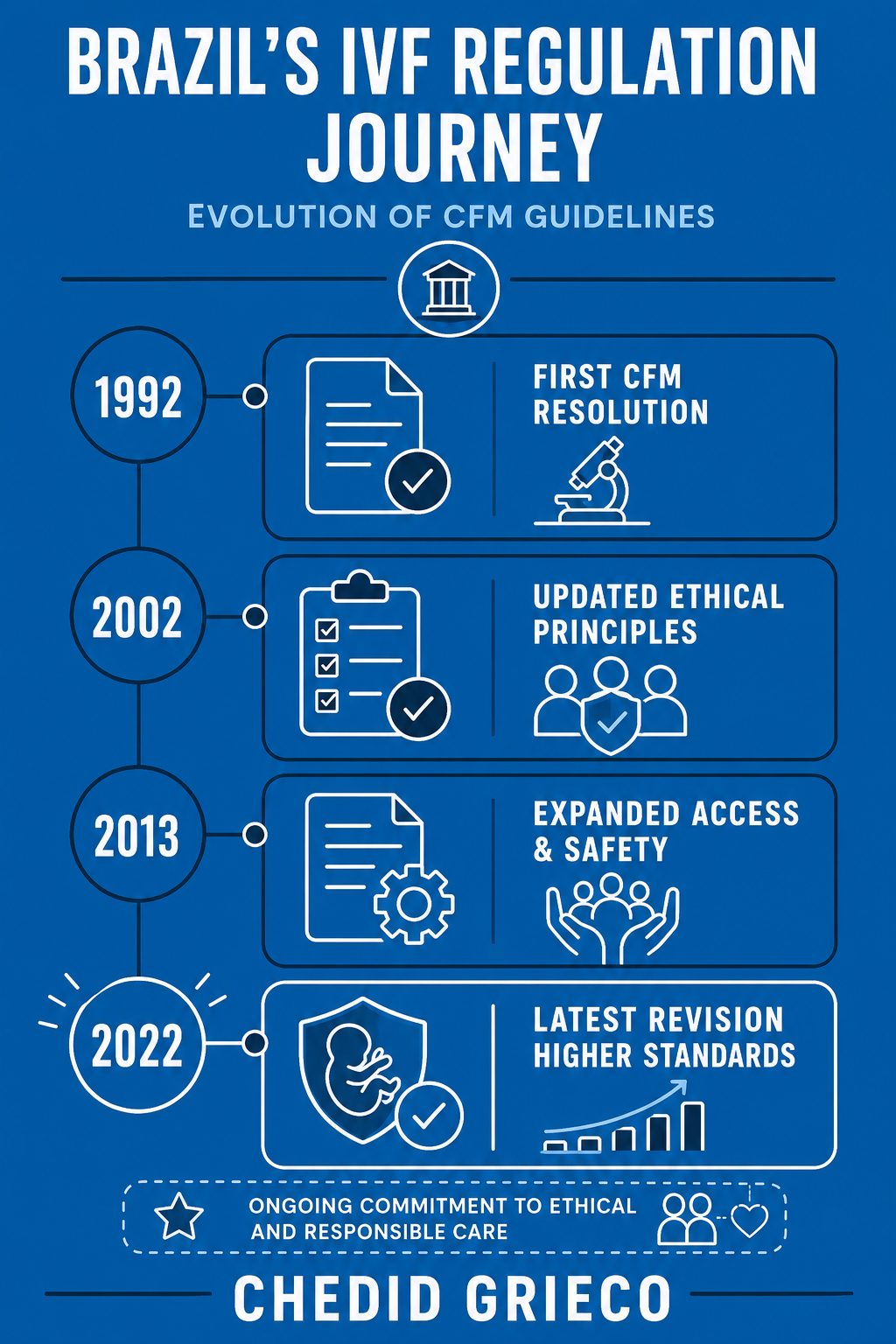
Brazil does not have a comprehensive national law governing assisted reproductive technology. Instead, the Federal Council of Medicine, known as the CFM, issues resolutions that clinics and hospitals are required to follow. According to research published in the NIH’s JBRA Assisted Reproduction journal, the CFM has issued multiple updates to its ART guidelines, with the most recent major revision released in 2022, reflecting Brazil’s ongoing effort to refine ethical standards in reproductive medicine.
Under these CFM guidelines, egg donation in Brazil must be anonymous. Donors and recipients are not permitted to know each other’s identities. This applies in both directions: you will not receive identifying information about your donor, and your donor will not receive identifying information about you. The altruistic model is also central to Brazil’s framework, meaning donors cannot receive financial compensation for their eggs.
What “Mandatory Anonymity” Means in Practice
Mandatory anonymity does not mean you will know nothing about your donor. Brazilian guidelines allow clinics to share non-identifying phenotypic information, which typically includes characteristics such as physical appearance, blood type, and general health history. This is what allows clinics to match donors and recipients based on compatible traits.
What you will not receive is identifying information such as the donor’s name, contact details, or any data that could be used to locate her. This differs notably from the open-donation model available in some US states, where donors may agree to be contacted by donor-conceived children once they reach adulthood. Our blog on egg donation programs abroad explores how different countries approach this question in more depth.
How This Compares to US Law
In the United States, egg donation is largely governed at the state level, and practices vary widely. Some states have no specific legislation at all, leaving donation agreements entirely to private contracts between clinics, donors, and recipients. Identity-release programs do exist in the US, meaning a donor-conceived child may be able to access identifying information about the donor after turning 18, if both parties agreed to this arrangement at the time of donation.
Brazil’s framework is more uniform in its requirement of anonymity, but also more consistent in its application. Every clinic operating under CFM guidelines follows the same rules. For US patients who are used to more variable state-by-state approaches, this uniformity can actually feel reassuring. Our blog comparing Brazil fertility regulations to US state laws provides a useful side-by-side look, and our post on how fertility treatments abroad are regulated gives broader context on international oversight.
Navigate Your Next Steps With Chedid Grieco Today
Navigating egg donation across two countries comes with real legal and logistical nuances, and having the right clinical partner makes a significant difference. With over 30 years of experience, FDA and New York State tissue bank licensing, and more than 8,780 babies born, Chedid Grieco is equipped to guide US intended parents through the Brazilian egg donation process with the clarity and care you deserve. We are one of the few clinics outside the US authorized to ship frozen donor eggs directly to clinics in New York, California, and beyond.
Consultations are held at our Miami, Florida office, while treatments are conducted at our São Paulo, Brazil clinic. Our fertility tourism model makes cross-border care accessible and well-coordinated from start to finish. When you are ready to learn more about how our egg donation program works for US patients, reach out through our contact form to get started.
Recent Posts