

The Role of Acupuncture in Enhancing IVF Success Rates
Medically Reviewed by Dr. Silvana Chedid on September 9, 2026
Acupuncture may offer a modest, complementary benefit for some patients undergoing IVF, primarily by helping manage stress and potentially supporting blood flow to the uterus and ovaries, though the clinical research on its effect on pregnancy and live birth rates remains mixed. Some studies show a meaningful improvement in clinical pregnancy rates when acupuncture is compared with no additional treatment, while others find little difference when acupuncture is compared with a sham, or placebo, version of the treatment. For most patients, acupuncture is best understood as a supportive addition alongside proven fertility treatments rather than a replacement for them.
At Chedid Grieco, we take a holistic view of fertility care that considers a patient’s full well-being, not just their treatment protocol. Our team works alongside patients considering complementary therapies like acupuncture as part of their IVF plan, helping them understand what the evidence does and does not show before they decide whether to add it to their care.
Understanding Acupuncture in Fertility Treatment
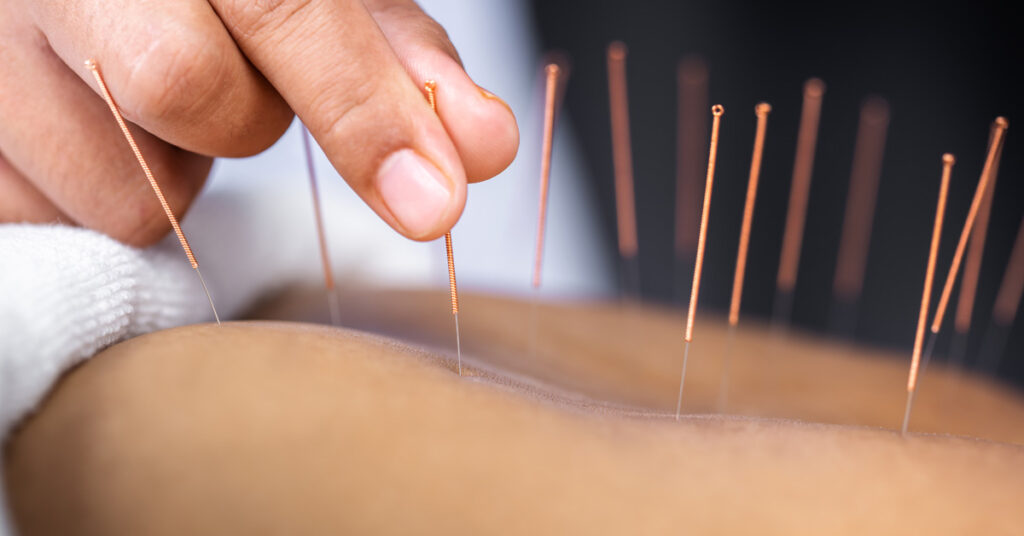
Acupuncture involves inserting very thin needles at specific points on the body to stimulate the nervous system and, according to traditional Chinese medicine, to promote the flow of energy through the body. In a fertility context, practitioners target points believed to support reproductive function and reduce stress.
Researchers have proposed several mechanisms through which acupuncture might support reproductive health, including the following:
- Reducing stress hormones that can interfere with reproductive function
- Increasing blood flow to the uterus and ovaries
- Helping regulate ovulation in some patients with irregular cycles
- Potentially supporting sperm quality in male partners
These mechanisms are biologically plausible and supported by some smaller studies, though larger, well-controlled trials have produced mixed results, which is an important distinction for patients weighing whether to add acupuncture to their treatment plan. Acupuncture is generally classified as a complementary therapy rather than an alternative one, meaning it is intended to work alongside, and not in place of, evidence-based fertility treatments such as IVF, ovarian stimulation medications, or embryo transfer protocols. Patients who are curious about acupuncture should think of it the same way they would think of any complementary therapy: worth discussing with their care team, but not a substitute for the medical treatment plan a fertility specialist has recommended.
What the Research Actually Shows
The research on acupuncture and IVF outcomes has grown substantially since early studies first proposed a connection between acupuncture and reproductive outcomes, but the results remain mixed rather than conclusive. Some meta-analyses have found that acupuncture is associated with higher clinical pregnancy rates when compared with no additional treatment, while showing little to no advantage when compared with sham acupuncture, a placebo-style treatment using non-penetrating needles at non-treatment points. This pattern suggests that at least part of the benefit some patients experience may come from relaxation, attention, and the ritual of care itself, rather than the specific acupuncture points used.
A 2020 study on the timing of acupuncture around embryo transfer found that sessions performed shortly before and after transfer were associated with improved IVF outcomes compared with no acupuncture, adding some support to the specific pre- and post-transfer protocol many acupuncturists recommend. Even so, no clinical study has shown that acupuncture reliably increases live birth rates on its own, and patients should understand it as a potential complement to, not a substitute for, evidence-based fertility treatment. Study quality also varies considerably across this body of research. Sample sizes are often small, acupuncture protocols differ from clinic to clinic, and what counts as a proper placebo, or sham, control is still debated among researchers. Patients reading claims about acupuncture and fertility online should look for whether a study compared acupuncture with a true no-treatment or sham-treatment group, since comparisons without a control group tend to overstate the benefit.
Timing of Acupuncture Treatment During IVF
The timing of acupuncture sessions relative to an IVF cycle can be planned strategically. Fertility specialists and acupuncturists can work together to recommend a schedule based on a patient’s individual protocol and goals.
Common approaches include the following:
- Pre-treatment phase: Regular sessions for two to three months before starting IVF, intended to support overall reproductive health
- During stimulation: Sessions during ovarian stimulation, intended to potentially support follicle development
- Pre and post embryo transfer: Sessions immediately before and after transfer, an approach sometimes called the Paulus protocol after the researcher who first studied it
- Early pregnancy: Continued sessions in early pregnancy that some patients pursue for stress management and relaxation
The potential benefits of acupuncture vary from person to person, and a fertility specialist can help determine whether this complementary approach fits a patient’s specific treatment plan and hormonal and reproductive consultation.
What to Expect During Acupuncture Treatment
Patients considering acupuncture as part of their fertility care can expect a first appointment that begins with a detailed consultation about medical history, fertility diagnosis, and current treatment plan. Many acupuncturists trained in Chinese medicine will also check pulse points and examine the tongue as part of a traditional diagnostic approach, then develop a treatment plan based on that assessment.
During treatment, patients lie comfortably while very thin, sterile needles are placed at selected points. Most people feel minimal or no discomfort during insertion. Needles typically remain in place for twenty to thirty minutes while the patient rests, and many describe the experience as deeply relaxing, which can itself be valuable given the stress that often accompanies fertility treatment.
Balancing Complementary Care With Your IVF Treatment Plan
Fertility treatment can be physically and emotionally demanding, and many patients look for ways to feel more in control of their care during a process that can otherwise feel entirely out of their hands. Acupuncture is one option some patients add for exactly this reason, alongside other approaches to balancing fertility treatment with daily life, such as adjusting work schedules or building in more rest between appointments.
Our team’s role is to make sure any complementary therapy a patient chooses fits safely alongside their medical protocol rather than working against it. We encourage open conversation about any complementary treatments a patient is considering, including acupuncture, supplements, or other therapies, so we can flag any potential interactions and keep the full care team informed.
Contact Chedid Grieco for Comprehensive Fertility Care
Dr. Silvana Chedid and the Chedid Grieco team bring decades of experience in reproductive medicine and a holistic approach that considers every aspect of a patient’s well-being, not only their treatment protocol. As one of a small number of clinics outside the United States holding a New York tissue license, we combine advanced reproductive technology with support for complementary therapies patients choose to pursue alongside their care.
If you are curious whether acupuncture or another complementary therapy might fit into your IVF plan, our team can talk through the evidence and help you make an informed decision based on your specific situation, rather than a generic recommendation that may not apply to your diagnosis or protocol. Consultations are held in Miami, with treatment provided at our FDA- and NYDH-licensed facility in Brazil through our fertility tourism program. Reach out through our contact form to schedule a consultation.
Frequently Asked Questions About Acupuncture and IVF
Does acupuncture actually improve IVF success rates?
The research is mixed. Some studies show acupuncture is associated with higher clinical pregnancy rates compared with no additional treatment, but many show little advantage over sham acupuncture, meaning some of the benefit may come from relaxation and stress reduction rather than the specific technique itself.
When should I start acupuncture if I want to try it during my IVF cycle?
Many patients start two to three months before beginning IVF to support overall reproductive health, then continue sessions timed around ovarian stimulation and embryo transfer. Your fertility team and acupuncturist can coordinate a schedule around your specific protocol.
Is acupuncture safe to combine with IVF medications?
Acupuncture is generally considered safe when performed by a licensed, experienced practitioner alongside standard fertility treatment. It is still important to tell your fertility team about any complementary therapy you are pursuing so your full care plan stays coordinated.
Does acupuncture hurt?
Most patients feel minimal or no discomfort during needle insertion, since the needles used are very thin. Many describe the treatment itself as relaxing rather than uncomfortable.
Can acupuncture help with the stress of fertility treatment even if it does not change pregnancy rates?
Many patients find value in acupuncture for stress relief and a sense of active participation in their care, independent of any direct effect on pregnancy outcomes. Reducing stress does not guarantee a different outcome, but it can make the treatment process feel more manageable for some patients.
About the Author
Reproductive Medicine Physician, Chedid Grieco
Dr. Silvana Chedid has practiced reproductive medicine for more than 25 years and introduced Intracytoplasmic Sperm Injection (ICSI) to Brazil. She leads the clinical team at Chedid Grieco, which holds consultations in Miami and provides treatment at an FDA- and NYDH-licensed facility in Sao Paulo, Brazil.
Recent Posts