

What Should You Know About Embryo Grading and Selection in IVF?
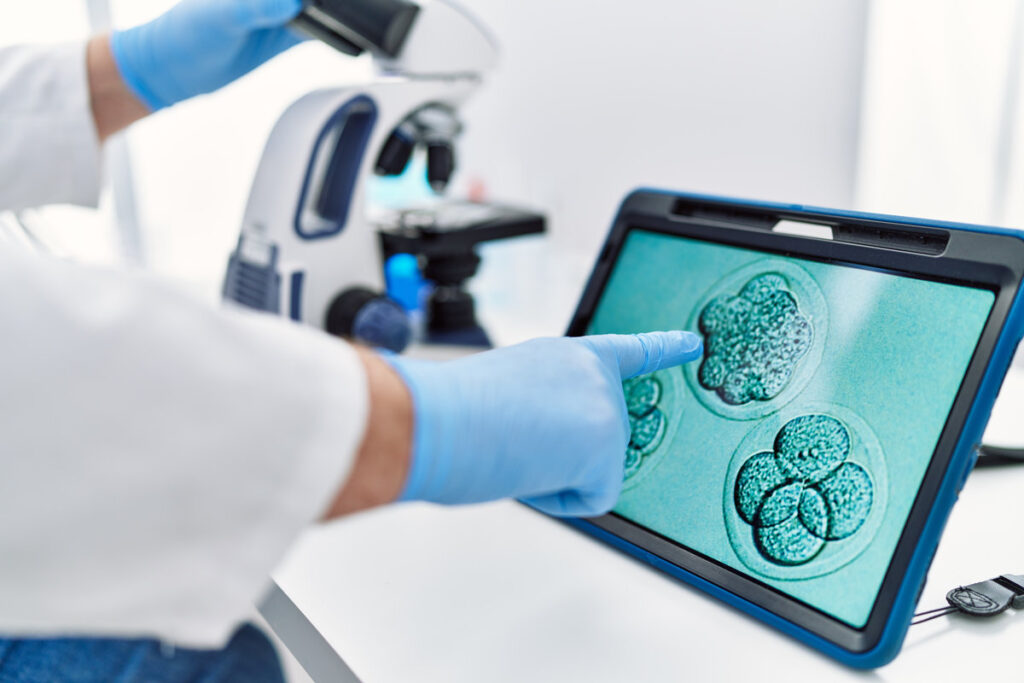
Embryo grading evaluates the quality and developmental potential of embryos created during in vitro fertilization, helping fertility teams identify which embryos are most likely to result in a successful pregnancy. This assessment considers factors like cell division rate, symmetry, and fragmentation to predict viability. Understanding how embryologists grade and select embryos can help you feel more confident and informed throughout your treatment.
Chedid Grieco brings 30 years of experience to embryo assessment and selection, combining advanced laboratory techniques with FDA and NYDH licensing standards. Our team in São Paulo, Brazil, operates one of only eight clinics outside the United States with a New York tissue license, ensuring your embryos receive the same rigorous quality standards found in top American facilities. With 8,780 babies born through our care, we guide you through every aspect of embryo development and selection with personalized attention.
How Embryologists Grade Embryos
Embryologists assess embryos at specific developmental stages to evaluate their quality and potential for implantation. The grading process typically occurs on Day 3 and Day 5 after fertilization, with each stage offering different insights into embryo health.
Day 3 Cleavage-Stage Assessment
On Day 3, embryologists examine cleavage-stage embryos, which ideally contain six to eight cells. They evaluate cell number, symmetry, and fragmentation. Fragmentation refers to small pieces of cellular material that break off during division; lower fragmentation generally indicates higher quality. Symmetrical cells of similar size suggest more organized development.
Day 5 Blastocyst Evaluation
Day 5 embryos, called blastocysts, undergo a more detailed assessment. At this stage, embryologists examine three components: the inner cell mass (which becomes the baby), the trophectoderm (which becomes the placenta), and the degree of expansion. The standard grading system assigns a number for expansion (1-6) and letters for the inner cell mass and trophectoderm quality (A, B, or C). A grade of 4AA represents an expanded blastocyst with excellent quality in both components.
What Factors Influence Embryo Quality
Several biological and environmental factors affect how embryos develop in the laboratory. Age is one of the most significant influences, as egg quality typically declines after 35 and more rapidly after 37. This affects chromosome distribution during cell division, leading to higher rates of chromosomal abnormalities in embryos from older eggs.
Sperm quality also affects early embryo development. While intracytoplasmic sperm injection can overcome many male factor issues, DNA fragmentation in sperm may still impact embryo quality and development past the blastocyst transfer stage. Laboratory conditions must maintain precise temperature, humidity, and gas composition to support optimal embryo growth.
Genetic factors can affect embryo quality regardless of age. Some individuals carry chromosomal variations or genetic mutations, which increase the risk of chromosomal abnormalities in embryos. Preimplantation genetic diagnosis can identify these issues before transfer, improving the chances of selecting a healthy embryo.
Understanding Embryo Selection Criteria
Fertility teams use multiple criteria beyond basic grading to select the best embryo for transfer. Morphology remains essential, but embryologists also consider developmental timing: embryos reaching the blastocyst stage on Day 5 or early Day 6 generally have better potential than those developing more slowly.
Some clinics use time-lapse imaging technology to monitor embryos continuously without removing them from the incubator. This technology reveals details about cell division patterns and timing that standard observation might miss. Embryos with smooth, regular division patterns typically have better implantation rates than those showing irregular or delayed divisions.
When multiple high-quality embryos are available, patient-specific factors guide the final selection. These include:
- Age and ovarian reserve: younger patients with good ovarian reserve may choose to transfer a single top-quality embryo, while others might consider transferring two to maximize success rates.
- Previous cycle outcomes: if earlier transfers with specific embryo grades were unsuccessful, the team may adjust selection criteria or recommend additional testing.
- Genetic testing results: when available, genetic screening results take priority over morphological grading, as chromosomally normal embryos have significantly higher success rates.
- Embryo availability: the number of good-quality embryos determines whether to transfer fresh embryos or freeze all for later transfer.
The goal is to balance the highest chance of pregnancy with the lowest risk of multiple pregnancy, while considering your specific medical history and treatment goals.
Schedule Your Consultation With Chedid Grieco
Embryo grading and selection combine scientific assessment with personalized care to give you the best chance of building your family. Our laboratory in São Paulo maintains the highest international standards through FDA and NYDH licensing, providing the same quality control you would find at leading American clinics with more affordable treatment costs. The experience of our team, combined with advanced techniques in embryo culture and assessment, has helped thousands of families worldwide achieve successful pregnancies.
We offer consultations in Miami, Florida, while treatments take place in Brazil. Learn more about how fertility tourism can make high-quality care accessible and affordable. Contact us today to discuss how our personalized approach to embryo selection can support your path to parenthood.