
What Is Assisted Hatching and When Is It Recommended During IVF?

During an IVF cycle, a fertilized egg must break free from its protective outer shell, called the zona pellucida, before it can implant in the uterine lining. In some cases, this shell becomes thicker or harder than usual, making it more difficult for the embryo to hatch naturally and reducing the chances of a successful implantation. Assisted hatching is a laboratory technique designed to address exactly this challenge, giving the embryo a better opportunity to implant and develop.
At Chedid Grieco, our team has spent more than 30 years working with advanced reproductive techniques to give patients the most personalized care possible. As part of our advanced techniques, assisted hatching is one of the tools we may recommend depending on a patient’s specific circumstances, medical history, and treatment goals. Understanding how this procedure works and who may benefit from it can help you feel more prepared as you move through your fertility care.
What Happens During Assisted Hatching?
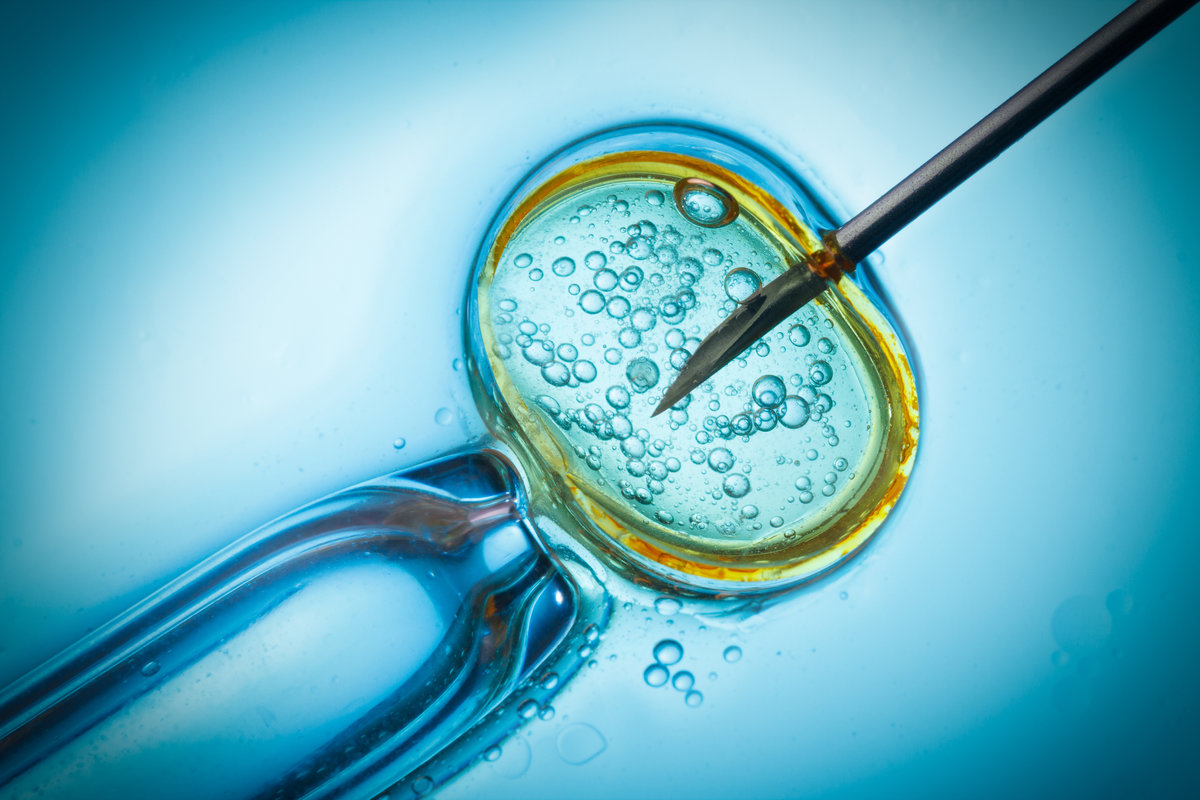
Assisted hatching is performed in the embryology laboratory, typically on day three of embryo development or just before embryo transfer. A trained embryologist uses one of several techniques to create a small opening or thinned area in the zona pellucida, making it easier for the growing embryo to break free and attach to the uterine wall.
The most widely used method today is laser-assisted hatching, in which precise laser pulses are applied to weaken the shell without harming the embryo. According to the American Society for Reproductive Medicine’s patient education resource, the most common method involves laser pulses to create a small opening in the zona pellucida, though chemical methods using an acid solution have also been used historically. The entire procedure takes place under a microscope and is completed before the embryo is placed into the uterus during in vitro fertilization.
When Is Assisted Hatching Recommended?
Assisted hatching is not a standard step in every IVF cycle. It is typically reserved for patients whose circumstances suggest the embryo may have difficulty hatching on its own, and your care team will evaluate several factors when making this determination.
Patients who are often considered candidates for assisted hatching include those in the following situations:
- Women of advanced maternal age, generally 37 or older, whose eggs may produce embryos with a thicker zona pellucida
- Patients who have experienced two or more failed IVF cycles despite good embryo quality
- Embryos with an unusually thick zona pellucida, as measured in the laboratory
- Patients using frozen embryos, as the cryopreservation process can affect zona pellucida texture
Each of these factors can interfere with the embryo’s ability to hatch naturally, which is why assisted hatching may offer meaningful support in select cases.
Assisted Hatching and Genetic Testing
One additional context in which assisted hatching plays an important role is when preimplantation genetic diagnosis is planned as part of treatment. In this process, a small number of cells are biopsied from the outer layer of the embryo at the blastocyst stage, typically around day five or six after fertilization. Assisted hatching performed earlier in development can facilitate access to those cells, making the biopsy more straightforward.
When genetic testing is part of your plan, the timing and method of assisted hatching will be coordinated carefully with the screening process. Whether you are pursuing testing for chromosomal concerns or specific inherited conditions, our team ensures each step is carried out with precision, including a blastocyst transfer once the healthiest embryo has been identified.
Begin Your Care With Chedid Grieco
Chedid Grieco holds both FDA licensing and a New York Department of Health (NYDH) tissue license, making us one of only 8 clinics outside the United States to carry this distinction. With 8,780 babies born, 1,200 cycles performed each year, and a multilingual team fluent in English, Spanish, Portuguese, and French, we provide boutique-level fertility care to patients from around the world. Patients exploring international options are welcome to review our fertility tourism page for details on how we support you throughout the process.
Consultations take place in Miami, Florida, while treatments are conducted at our advanced laboratory in São Paulo, Brazil, a model built around your comfort, your needs, and your goals. If you have questions about assisted hatching or want to find out whether it may be part of your treatment plan, reach out through ourcontact form to schedule your consultation today.